Supply Chain
Bulk Magnesium Glycinate Powder Specifications for Ingredient Buyers
Which fields a bulk magnesium glycinate powder specification needs, from assay basis and bulk density to drum packing, sampling and beverage checks.
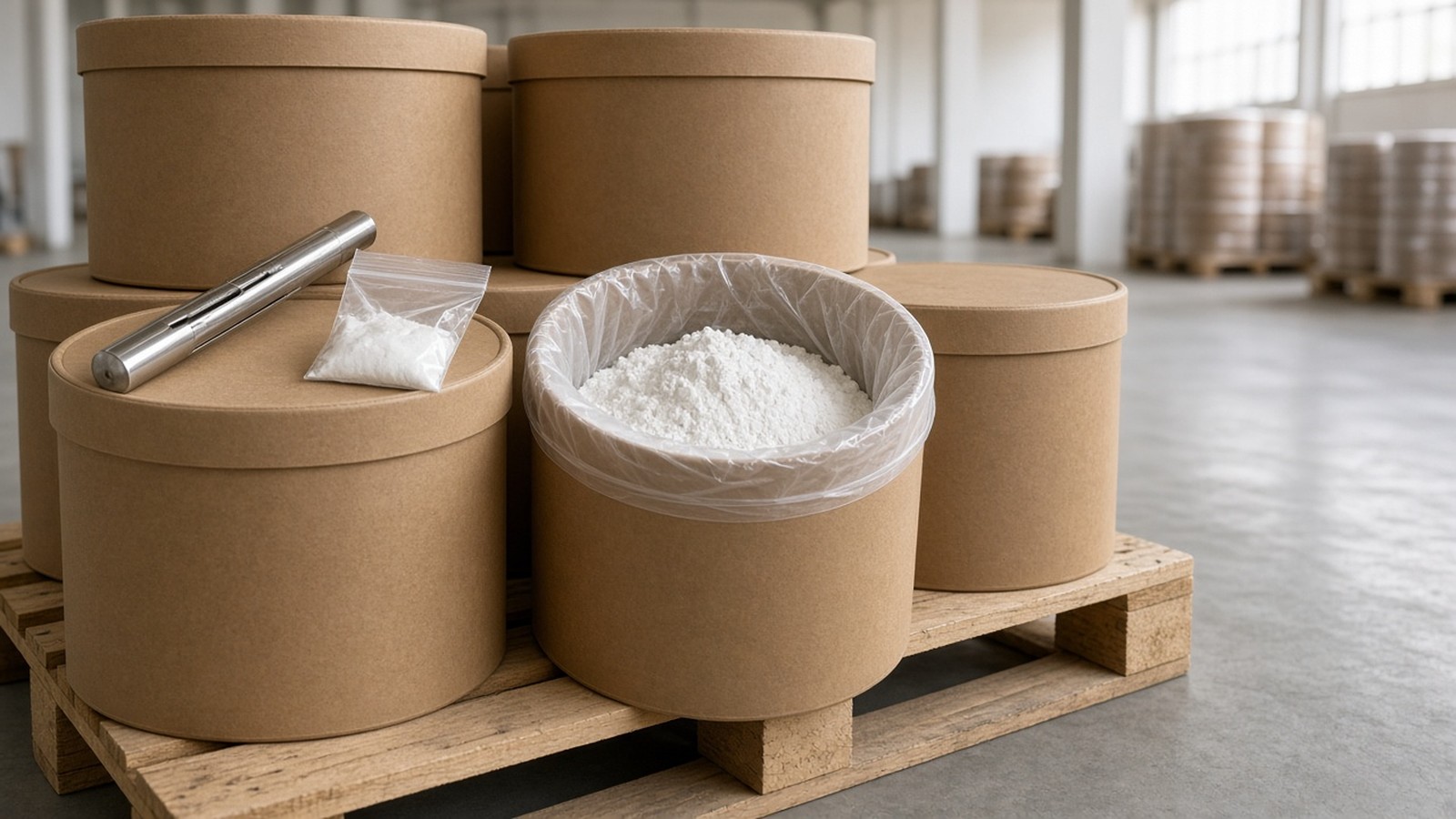
A sample jar and a production drum are not the same purchase. When a brand or contract manufacturer moves from a 50 g evaluation sample to bulk magnesium glycinate powder, the specification has to describe material that will be dispensed by the kilogram, blended at scale and released lot after lot. Fields that were optional during bench work, such as bulk density, pack format and sampling plan, start to decide whether the plant can run.
This guide lists the fields a buyer should put in a bulk magnesium glycinate specification, explains why each one matters at production scale, and notes what changes when the material is bulk magnesium glycinate for beverages rather than for capsules. It stays on the specification and the criteria used to accept a lot. Pack sizes, trial orders and quote terms are covered in our wholesale guide. What moves the cost is covered in bulk magnesium glycinate pricing. Reorder timing is covered in the lead time and reorder plan. Checks at the dock are covered in packaging, shipment and receiving inspection.
Start with identity and the name on the paperwork
Suppliers sell the same chemistry under two names. Bulk magnesium bisglycinate powder and bulk magnesium glycinate powder usually describe the same chelate of magnesium with two glycine ligands, but the specification should say which name the buyer will use on purchase orders, COAs and labels, so the documents match. Our article on glycinate and bisglycinate naming covers the difference in more detail.
For dietary supplements, the regulation sets the minimum structure. Under 21 CFR 111.70(b), each component needs an identity specification, component specifications needed to ensure that the finished product's purity, strength and composition specifications will be met, and limits on contamination that may adulterate or lead to adulteration of the finished batch. A bulk specification that covers those three blocks gives the receiving team something to test against.
Elemental magnesium and the assay basis
The most important number on the sheet is the elemental magnesium assay, and it is only useful with its basis. State whether the assay is reported as-is or on a dry basis, the acceptable range, and the method. A stated elemental percentage is a formulation input, not a purity claim. The theoretical magnesium content of a fully reacted magnesium bisglycinate is about 14.1%, so commercial grades with lower assays reflect their composition and should be specified by assay rather than by name alone.
Assay drives scale-up math. At an 8% as-is assay, a full drum holding 25 kg of powder carries 2.0 kg of elemental magnesium. If the assay is reported on a dry basis, subtract the moisture first, then apply the assay to the remaining dry mass. At 84 mg of magnesium per serving, the 8% as-is example is enough for about 23,800 servings before process loss. If the next lot comes in at a different assay, the batch input changes, which is why the elemental magnesium calculator and a written assay adjustment rule belong in the batch record.
Physical properties that matter at bulk scale
Particle size. Agree a range and a method. Particle size affects dissolution speed in drinks, segregation in blends and flow through feeders. Our guide to particle size specifications explains how to set one for each dosage form.
Bulk and tapped density. These numbers tell the plant how much volume a batch will occupy and how the powder will behave in hoppers and stick pack augers. As an illustration, a powder with a bulk density of 0.5 g/mL fills about 50 L per 25 kg, while one at 0.7 g/mL fills about 36 L. The bulk and tapped density guide covers measurement and what the ratio between the two says about flow.
Moisture. Set a limit and a method, and keep the method consistent between supplier and buyer. Moisture affects flow, caking and the as-is assay.
Purity and contaminant limits
Write limits for heavy metals, microbiology and any other contaminant relevant to the finished product and its markets. For heavy metals, name the elements and the method, and decide whether the limits are set per gram of ingredient or back-calculated from the finished serving. The heavy metals specification page and the microbial specification review give a starting structure. Brands selling into California should also read our note on Proposition 65 and magnesium ingredients.
For conventional foods, including most beverages, 21 CFR 117.80(b) requires raw materials to be inspected and handled as necessary to ascertain that they are clean and suitable for processing into food. Liquid or dry ingredients received and stored in bulk form must be held in a manner that protects against allergen cross-contact and against contamination. The specification and the receiving procedure should describe how the plant does that for this ingredient.
Packing, labeling and storage
Bulk powder specifications often leave the pack undefined, and the plant finds out at receiving. State the pack format, the net weight per container, the liner, how each container is labeled with lot number and dates, and how many containers make up a pallet if that matters to the warehouse. MagneINNO material ships in 25 kg fiber drums with a 24-month shelf life in the original packaging. The pack size belongs on the specification; commercial quantity and quote terms do not.
Storage conditions belong on the specification too. Magnesium glycinate can pick up moisture once a liner is opened, so write the storage temperature and humidity guidance and a rule for resealing part-used drums. The packaging and storage stability page covers how packaging and storage affect the material over time.
Sampling a bulk lot
A COA describes the lot the supplier tested. The buyer's own release depends on how it samples what arrived. For dietary supplements, 21 CFR 111.155(c) requires components to be quarantined until representative samples of each unique lot within each unique shipment are collected, and quality control reviews the results and approves the components for use. 21 CFR 111.75(a) requires at least one appropriate identity test or examination on a dietary ingredient. It allows reliance on a supplier COA for other component specifications only when these conditions are met: the buyer first qualifies the supplier by establishing the reliability of the supplier's COA through confirmation of the supplier's test or examination results; the COA includes a description of the methods, the limits and the actual results; the buyer keeps documentation of how the supplier was qualified, and quality control reviews and approves the documentation that sets out the basis for qualification and requalification; and the buyer periodically re-confirms the supplier's COA.
Decide how many drums are sampled, from where in each drum, and whether samples are tested individually or composited. The representative sampling guide explains the trade-offs, and our article on incoming release and periodic verification testing covers which tests to repeat on every lot.
What changes for bulk magnesium glycinate for beverages
A beverage buyer needs everything above plus a few checks that a capsule buyer can skip. These fields usually separate a beverage grade magnesium glycinate from a general supplement grade on the specification:
- appearance of a solution at the intended use level, including any haze, turbidity or insoluble residue
- pH of a stated solution, so the formulator knows what the ingredient does to the base
- taste and odor of a stated solution, assessed against a retained reference
- dissolution time at a stated concentration and temperature, the practical check when the powder is used as a water soluble magnesium for drinks
None of these requires a proprietary method. They need a written concentration, temperature and acceptance criterion so supplier and buyer test the same thing. The beverage clarity and stability screen shows a simple way to set up the solution checks, and our beverage-grade supplier guide covers what to ask a magnesium for beverages supplier before the first bulk purchase.
If the powder will later be dosed through a mineral premix for beverages or a powder drink mix, carry the same identity, assay basis and particle-size limits into that brief so the magnesium ingredient for beverages does not change between the drum and the batch.
A short checklist for the bulk specification
Field | What to write |
|---|---|
Identity | Ingredient name used on all documents, identity method |
Assay | Elemental magnesium range, as-is or dry basis, method |
Physical | Particle size range and method, bulk and tapped density, moisture limit |
Contaminants | Heavy metal limits by element, microbial limits, methods |
Beverage checks | Solution appearance, pH, taste, dissolution conditions |
Pack | Container type, net weight, liner, label content |
Storage | Temperature, humidity, resealing rule |
Sampling | Containers sampled, sample location, composite or individual |
Link this sheet to the purchase order and to the supplier's change notification terms. Our article on specification change control explains how to keep both sides aligned when a field needs to change.
Frequently asked questions
Is bulk magnesium bisglycinate powder a different product from bulk magnesium glycinate powder?
Usually not. The two names are used for the same magnesium and glycine chelate. Confirm identity, assay and composition on the specification instead of relying on the name.
Should a bulk specification include bulk density?
Yes, if the material will be dosed volumetrically, filled into stick packs or blended in large batches. It helps the plant size equipment and predict flow.
Does the bulk specification replace the supplier COA?
No. The specification states what the buyer will accept. Each lot COA reports results against it, and the buyer's receiving tests confirm identity and any other agreed attributes.
Should price or lead time be written into the specification?
No. Keep commercial terms on the quote and the purchase order. The specification describes the material the plant will accept, not when it will ship or what it will cost.
Request a bulk specification and samples
MagneINNO supplies magnesium glycinate from U.S. stock in Ontario, California through NutraINNO USA Inc. The 8% Ultra Taste Free grade is the usual starting point for powders and beverages. Material ships in 25 kg fiber drums. Contact our technical team for the current specification, a lot COA and free 50 g samples for your evaluation.
Need documentation?