Formulation
How to Set a Magnesium Glycinate Particle-Size Specification for Different Dosage Forms
Set an auditable magnesium glycinate particle-size specification by aligning the test method, distribution descriptors and lot limits with your formulation and pilot evidence.
There is no universal particle-size limit for magnesium glycinate that can be applied to every capsule, tablet, powder or beverage. A useful specification defines how particle size is measured, which parts of the distribution are controlled and why the proposed limits suit the formulation and process. Set limits from method-specific results and dosage-form trials, not by borrowing a threshold from another material or application.
This is a raw-ingredient control, not a finished-product performance guarantee. A magnesium glycinate lot may meet its particle-size specification while the finished blend or product still needs its own process controls and evaluation. Keep particle size distinct from elemental magnesium content, ingredient purity and chelation: particle-size results do not establish any of those attributes.
Why the specification needs context
Particle size is one physical characteristic that can matter when particulate ingredients are mixed and handled. FDA's historical guide for oral solid dosage forms discusses particle size, particle shape and bulk density as potential contributors to dosage-form uniformity, particularly in direct compression and direct encapsulation. It also describes how differences among particles can contribute to segregation during mixing or later handling. That document concerns drug products and is not a current dietary-supplement particle-size standard; use it as background on powder behavior, not as a magnesium glycinate limit or regulatory requirement. Read the FDA oral solid dosage forms guide
The dosage form changes what your development team needs to learn. For a capsule or tablet blend, trial whether the selected grade and process produce acceptable material handling and finished-unit consistency. For a powder or stick pack, assess how the ingredient behaves in the actual blend, filling and packaging process. For a beverage, test the complete formula under its intended preparation and storage conditions. These are development questions, not predictions that a particular particle size will guarantee a result.
MagneINNO's powder-flow and density guide covers related powder measurements. Treat them as complementary evidence: a flow or density result does not substitute for a particle-size distribution, and a particle-size result alone does not characterize the whole powder or prove it will run well on your equipment.
Define the measurement before the limits
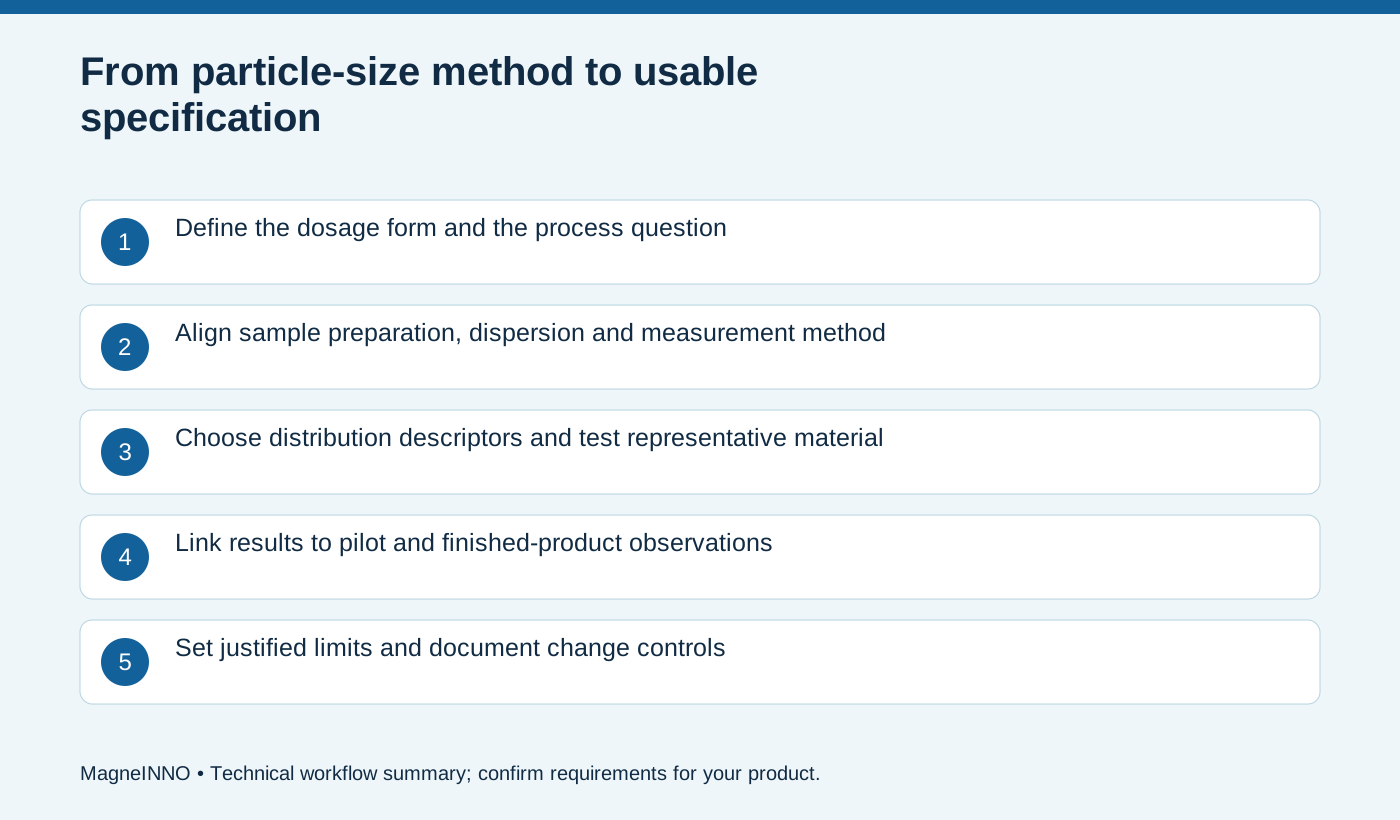
A reported size distribution is meaningful only when the method and sample preparation are clear enough to reproduce. In the raw-material specification or controlled test method, identify the measurement technique, sample handling, dispersion approach and relevant operating conditions. Document any preparation that could change how particles are presented to the instrument, including how the sample is dispersed. Ask the laboratory to explain how its method represents the material as received and what repeatability it has demonstrated for this use.
Record the distribution descriptors you intend to use. A common way to describe a distribution is with D10, D50 and D90: the points below which 10%, 50% and 90% of the measured distribution fall, respectively. State the basis and units reported by the method, and do not compare values until you confirm that laboratories are using compatible definitions, methods and dispersion conditions. A single midpoint can conceal changes in the fine or coarse portions that may matter to your process.
If a supplier's certificate of analysis reports only one descriptor, or uses a method that differs from your internal test, request the method details and representative supporting data before treating the result as interchangeable. A practical QA and procurement step is to agree in writing how reporting bases and methods will be reconciled, including which result governs lot disposition. Do not infer a pass or fail from a value generated under an unaligned method.
Build limits from trials, not borrowed thresholds
Start with the performance need for the specific formula and manufacturing process. Identify the issue the proposed control is intended to manage, such as a change in blend uniformity or a process-handling concern. Then evaluate representative lots or samples spanning the variation you could reasonably encounter. Record the raw-material distribution alongside relevant in-process observations and finished-product results. The purpose is to determine whether the proposed descriptor and limit help control a demonstrated risk, rather than to make the specification more restrictive without a formulation reason.
FDA's dietary supplement CGMP compliance guide describes establishing component and process specifications and using scientifically valid methods for required testing. It is nonbinding guidance and summarizes requirements within its stated scope; it does not prescribe a magnesium glycinate particle-size range. Translate that principle into a documented, fit-for-purpose method and an acceptance range justified by your product and process evidence. See FDA's dietary supplement CGMP compliance guide
For each dosage form, define the trial endpoints with the contract manufacturer and formulation team before setting a lot limit. A capsule or tablet program may need to examine blend and finished-unit consistency under the intended process. A powder program can check the blend and packaging operations actually used. A beverage program should evaluate the finished formula, not treat raw-material particle size as a standalone prediction of clarity, dispersibility or stability. Use the results to determine whether a particular distribution descriptor should be controlled and how much variation the process can tolerate.
Once the trials support a range, document its method, descriptor, units, sampling plan, acceptance criteria and change-control expectations. Confirm the range can be measured consistently and discussed clearly between supplier, buyer and testing laboratory. Avoid limits that are wider than your evidence supports or narrower than your method can reliably distinguish. Review the limit if the formulation, equipment, processing conditions or source changes. FDA's oral-solid guide similarly emphasizes that physical ranges need verification in the process where they are used; its drug-specific context means this is a development lesson, not a supplement mandate.
Procurement and qualification checklist
- State the application, manufacturing route and specific quality or process concern the particle-size control is meant to address.
- Obtain the supplier's method, sample-preparation and dispersion details, reported descriptors, units and available lot-to-lot data.
- Align laboratory methods and reporting bases with QA before comparing supplier results or setting disposition criteria.
- Run representative material through the intended formulation and process; link raw-material results to relevant in-process and finished-product observations.
- Approve only limits supported by the trials and a method suitable for the specification. Define requalification triggers for meaningful process or source changes.
For broader supplier and contract-manufacturer alignment, see the guide to specifying magnesium glycinate with your contract manufacturer. For traceability between incoming ingredient documentation and finished-product testing, review ingredient COAs and finished-product lot traceability
FAQs
Is there a standard magnesium glycinate particle-size range?
The supplied sources do not establish a universal range, and neither FDA source provides a magnesium glycinate threshold. Set a product- and process-specific criterion using a defined method and relevant trial evidence.
Can I compare D50 values from two suppliers?
Only after confirming that the descriptor has the same basis and that measurement, sample preparation and dispersion conditions are sufficiently aligned. If they are not, ask QA and the laboratories to reconcile the methods before using the results for qualification or lot decisions.
Does a passing raw-material result prove the finished product will perform?
No. The raw-material specification controls an incoming ingredient attribute. Evaluate the blend, process and finished product separately against the criteria appropriate to the actual dosage form.
What should procurement request from a supplier?
Request the particle-size test method, preparation and dispersion conditions, descriptors and units, representative lot data, and a written explanation of how the supplier handles specification changes. Coordinate any internal method comparison and acceptance criteria with QA before qualifying the material. Share your dosage form and proposed test plan with a supplier when requesting technical documentation or a sample for evaluation.
Need documentation?