The practical answer
Moving a magnesium concept from a dry powder to a ready-to-drink bottle changes more than the format. The finished product gains a water activity above 0.85, a measured equilibrium pH that can place it in a regulated process category, a thermal or non-thermal process step and a liquid shelf-life study. Plan ready to drink beverage magnesium fortification as a new development project that reuses the elemental target, not the powder formula. [1–3]
What carries over from the powder concept
The elemental magnesium target per serving, the assay basis of the chosen ingredient, the sensory direction and the category decision can all carry over. So does the core arithmetic: ingredient grams per serving equal the elemental target divided by the as-is assay. At 100 mg and 8%, that is 1.25 g per serving in a stick pack or in a bottle. The beverage magnesium serving calculator performs that conversion for a chosen serving volume.
What does not carry over is evidence. A powder that disperses well in a glass of water, tastes acceptable when freshly mixed and stays free-flowing in a sachet has not been tested for months in contact with water, acid, flavor and package.
What changes when water stays in the package
A dry powder has low water activity. A finished drink does not. 21 CFR 113.3 defines low-acid foods as foods, other than alcoholic beverages, with a finished equilibrium pH greater than 4.6 and a water activity greater than 0.85, and it states that tomatoes and tomato products with a finished equilibrium pH below 4.7 are not classed as low-acid foods. 21 CFR 114.3 defines acidified foods as low-acid foods to which acids or acid foods are added, with a water activity greater than 0.85 and a finished equilibrium pH of 4.6 or below. It excludes carbonated beverages, jams, jellies and preserves, certain acid foods containing small amounts of low-acid food, and foods that are stored, distributed and retailed under refrigeration. Where a drink lands in these definitions affects the process, the records and the people who must approve it. A process authority establishes the scheduled process. [1][2]
Juice-based concepts add another layer. Part 120 covers juice sold as such or used as an ingredient in beverages, and under 21 CFR 120.24 juice processors must include control measures in their HACCP plans that achieve at least a 5-log reduction in the pertinent microorganism, with specified exemptions. A product that could be labeled 100 percent juice is made under these rules. For a beverage that only contains juice as an ingredient, FDA guidance states that the beverage itself does not have to be produced under a HACCP system, but the juice ingredient must have been made under one. Confirm which case applies before the first trial. [3][5]
Process choice and hot fill beverage mineral stability
Hot fill, tunnel pasteurization, retort, aseptic filling and high pressure processing expose the fortified formula to different temperature and time profiles. Whether magnesium, acids, sugars and flavors interact under the chosen process is a question for the actual formula on a representative process, not for a general rule.
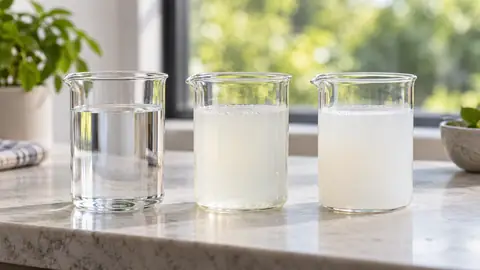
Measure the same samples before and after processing: pH, appearance or turbidity under a defined method, sediment, total magnesium and sensory attributes against a reference. Keep the unfortified base as a control so that changes caused by the process are not assigned to the magnesium ingredient.
Package and shelf-life scope
Magnesium beverage shelf life testing for an RTD covers the sealed product at the intended storage conditions over planned time points. Typical attributes include appearance, pH, sediment, magnesium assay, sensory character and any microbiological checks the process authority requires. A powder study follows moisture, caking and flow instead. Neither study can stand in for the other.
Decide the package early. Glass, PET, cans and cartons differ in light and oxygen exposure and in how visible any haze or sediment will be. Testing in a laboratory bottle and launching in a can leaves a gap in the evidence.
The manufacturing partners differ
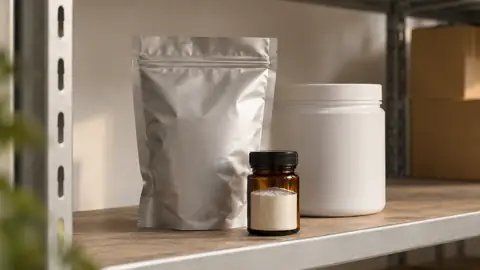
A magnesium powder drink mix manufacturer blends, fills and seals dry product and controls flow, segregation and fill weight. A beverage co-packer treats water, batches a liquid, fills, processes and codes containers. The handoff documents overlap, including the ingredient specification, lot COA, formula and acceptance criteria, but the process records and release tests are different.
Ask each partner which ingredient documents and samples they need before the first trial. Supply the same specification and assay basis to both so that the elemental target means the same thing in each format.
A staged route from concept to bottle
A practical sequence is a bench screen of the finished liquid base, then a bench simulation of the intended process, then a pilot run on the partner's equipment, then a stability study in the commercial package, and only then a commercial run. Each stage should state what it is meant to show and what it cannot show.
This comparison does not say that one format is better or more popular. It describes the additional work an RTD route adds so that timelines, sample quantities and responsibilities are realistic from the start.
Common questions
Can stability data from a powder support the shelf life of an RTD version?
No. The RTD product has a different water activity, pH, process and package, so it needs its own study.
Is every acidified drink at or below pH 4.6 an acidified food under part 114?
Not necessarily. 21 CFR 114.3 excludes carbonated beverages, jams, jellies and preserves, certain acid foods and foods that are stored, distributed and retailed under refrigeration, and the classification of a specific product is a process-authority and regulatory decision.
Sources & further reading
- 21 CFR 113.3, Thermally processed low-acid foods packaged in hermetically sealed containers: definitions
- 21 CFR 114.3, Acidified foods: definitions
- 21 CFR 120.24, Juice HACCP process controls
- FDA, Distinguishing Liquid Dietary Supplements from Beverages (2014)
- FDA, Guidance for Industry: Questions and Answers on Juice HACCP Regulation (September 2001)