The practical answer
Yes. Magnesium glycinate can be formulated into ready-to-drink beverages, drink powders and stick packs. Whether it works in a particular drink depends on the formula. The grade and the elemental magnesium per serving set the taste load, while the serving volume, pH, acids, flavors and process decide how it dissolves and looks. Decide first whether the product is a conventional beverage or a liquid dietary supplement, then confirm performance in the complete formula and package.
Decide the product category first
FDA treats beverages as conventional foods. Its 2014 guidance explains that a liquid product's classification follows from how it is represented, including its name, packaging, serving size, recommended daily intake, composition and marketing. A drink with a Supplement Facts panel is not automatically a dietary supplement. [1]
The category changes the ingredient review. In a conventional beverage, the ingredient needs a food-use basis for the intended use and level, and the label carries a Nutrition Facts panel. FDA's regulation at 21 CFR 170.30 sets out the criteria under which a substance is generally recognized as safe for its intended use. [2]
For food use, MagneINNO has made its own self-affirmed GRAS determination for its magnesium glycinate. Your regulatory team should review MagneINNO's supporting documentation against the planned use level before the formula is fixed.
The variables that decide whether it works
Write these variables into the development brief before you order samples. With them on paper, a supplier can recommend a grade for your actual drink.
| Variable | Why it matters in a drink | What to record |
|---|---|---|
| Elemental magnesium per serving | Sets how much ingredient goes into each serving, and taste load rises with it | Target in mg per serving and the other magnesium sources in the formula |
| Serving volume | The same dose is more concentrated in a 60 mL shot than in a 500 mL bottle | Volume per serving, or reconstitution volume for a powder |
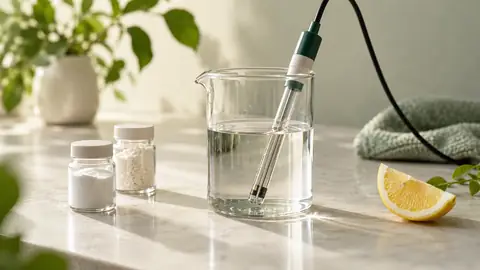
| pH and acid system | Affects dissolution, flavor and clarity | Target pH and the acids, buffers and other minerals present |
| Process and package | Heating, high pressure, carbonation and storage can change what you see on day one | Process steps, fill method, package material and planned storage |
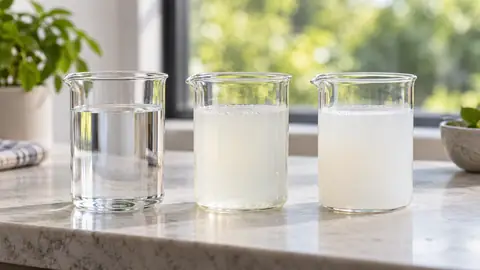
| Appearance target | A clear drink tolerates far less haze or sediment than a cloudy or opaque one | Clear, hazy or opaque, and how clarity will be judged |
On smaller screens, scroll the table horizontally.
How much ingredient one serving carries
For adults and children 4 years and older, the FDA Daily Value for magnesium on Nutrition Facts and Supplement Facts labels is 420 mg, and the %DV figures below use that value. Separate reference values apply to infants, children 1 to 3 years, and pregnant or lactating women. [3] Dividing the elemental magnesium target by the grade's magnesium fraction gives the ingredient mass. The table uses nominal grade values for arithmetic only. Use the assay and basis on the current specification and lot COA for a batch sheet. The figures are not a recommended intake or a label claim.
Concentration matters as much as mass. At 20% DV, 1,050 mg of an 8% grade is about 3.0 g of ingredient per liter in a 355 mL can, but about 2.1 g per liter in a 500 mL bottle. Run the dissolution and taste checks at the concentration the finished drink will actually contain.
| Grade (nominal elemental Mg) | 10% DV (42 mg Mg) | 20% DV (84 mg Mg) |
|---|---|---|
| Ultra Taste Free (8%) | 525 mg ingredient | 1,050 mg ingredient |
| Taste Free (10%) | 420 mg ingredient | 840 mg ingredient |
| Taste Optimized (12%) | 350 mg ingredient | 700 mg ingredient |
On smaller screens, scroll the table horizontally.
Which grade to screen first
MagneINNO lists Ultra Taste Free as the recommended starting point for powders, stick packs and beverages and designed it for low taste impact. Its lower magnesium fraction means more ingredient mass per serving. Taste Free is the recommended starting point for gummies, and a beverage team may add it to a screen when the serving needs more magnesium per gram of ingredient. Taste Optimized is designed for capsules and tablets. It gives the smallest ingredient mass, but its taste needs to be confirmed in the finished drink.
Screen candidates at the same elemental magnesium contribution and record the different ingredient masses alongside the results. The 8%, 10% and 12% labels are commercial elemental magnesium grade targets, not purity percentages. Magnesium glycinate and magnesium bisglycinate are commonly used as names for the same material. PubChem lists it under CID 84645 with the molecular formula C4H8MgN2O4. Confirm the declared composition in each grade specification. [4]
What a first bench screen should check
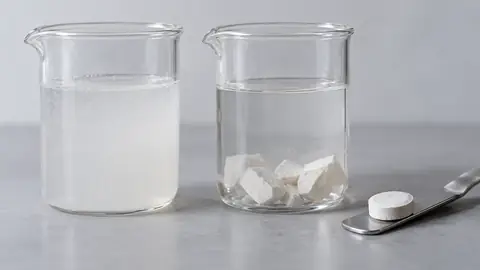
Prepare the base formula without magnesium as a control and a matched prototype at the target input. Record water source, addition order, mixing time, temperature and measured pH. Look at dissolution time, clarity, sediment and pH when fresh and again after a defined hold in the intended package. Use a structured sensory comparison against the control so the team gets a result it can repeat. [5]
The existing guides on this site cover the next steps in more detail: the beverage clarity and stability screen, solubility and dissolution test design, and the pH, citrate and phosphate investigation. A formula that looks good in the first beaker still needs pilot work on the real process before anyone commits to a production run.
Limits of this guidance
This page does not give a universal solubility figure, a pH window or a heat-processing limit for magnesium glycinate in drinks. It also does not establish the shelf life of a finished beverage. The 24-month shelf life of the ingredient applies to unopened original packaging stored under recommended conditions, not to the drink it goes into. Claims and finished-product labeling belong with your regulatory review.
Getting samples for a beverage trial
Free 50 g samples are available for each grade, so a bench screen can compare Ultra Taste Free with a second grade from the start. Commercial material is packed in 25 kg fiber drums. In-stock orders ship from California in about 3 days, and production orders take 1 to 2 weeks. When you request samples, include the elemental magnesium target per serving, the serving volume, the target pH, the process and the appearance target, so the recommendation fits your drink.
Common questions
Is magnesium glycinate the same as magnesium bisglycinate?
The two names are commonly used for the same material. Confirm the declared composition, elemental magnesium basis and identity method in the specification rather than relying on the name alone.
Will magnesium glycinate keep a clear beverage clear?
That depends on concentration, pH, other minerals, the process and storage time. Test the complete formula in the intended package at planned time points; a fresh clear beaker does not predict appearance through shelf life.
Can a magnesium drink use a Supplement Facts panel?
Only if the product is correctly classified as a liquid dietary supplement under FDA's classification factors. A product represented as a beverage is a conventional food and uses a Nutrition Facts panel.
Sources & further reading
- FDA: Distinguishing liquid dietary supplements from beverages (2014 guidance)
- 21 CFR 170.30: Eligibility for classification as generally recognized as safe (GRAS)
- FDA: Daily Value on the Nutrition and Supplement Facts labels
- NIH PubChem: Magnesium glycinate, CID 84645
- ISO 13299:2016: Establishing a sensory profile, official abstract