Formulation
Magnesium Sparkling Water Formulation for Beverage Brands
Regulatory route, naming, carbonation and magnesium glycinate checks to settle before a brand develops a sparkling magnesium water or seltzer.
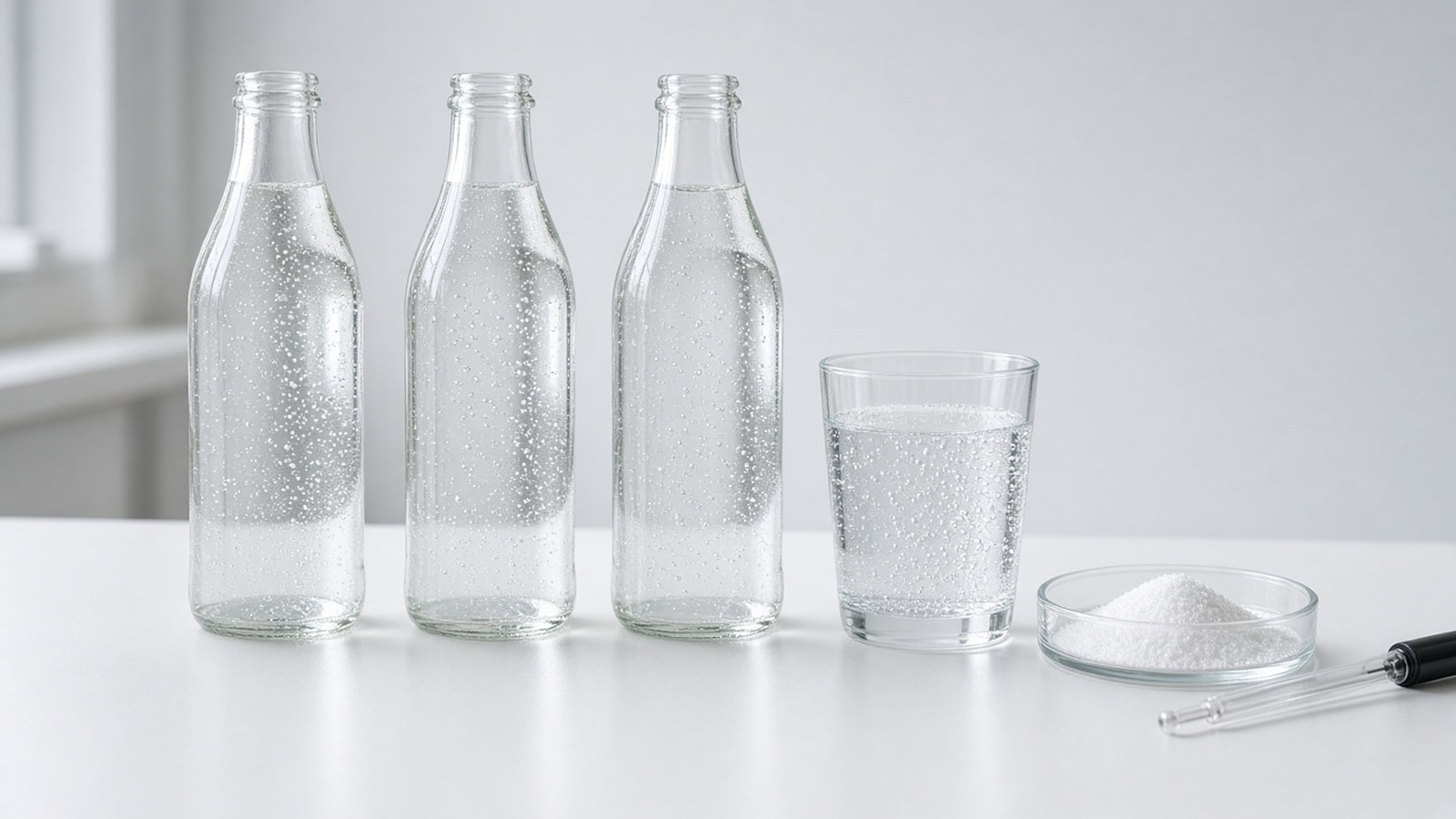
Sparkling water with added minerals looks like a simple brief. Take a seltzer, add magnesium, keep the taste clean. In practice, magnesium sparkling water formulation raises a regulatory question before it raises a technical one, because U.S. rules treat carbonated drinks, bottled water and dietary supplements differently. The answer decides the product name, the label panel, how much magnesium makes sense and what can be said about it.
This guide covers the decisions a beverage brand and its R&D team should make in order, from route to specification, when the magnesium source is magnesium glycinate.
Decide the regulatory route first
There are two broad routes for magnesium in carbonated beverages sold in the U.S.
A conventional beverage. If the product is named and sold as a water, seltzer or soda, it is a conventional food. FDA's guidance on distinguishing liquid dietary supplements from beverages says product names that use terms such as "beverage," "drink," "water" or "soda" represent the product as a conventional food. Packaging that resembles common beverage packaging points the same way.
A dietary supplement. A liquid can be a dietary supplement if its name, packaging, serving size, directions and marketing support that. A product sold in a soda-style can and named as a sparkling water is unlikely to qualify, so the supplement route usually means a different product concept, not just a different label.
Most brands asking for a sparkling magnesium water mean the first route. That is where FDA's fortification policy comes in.
What FDA's fortification policy says about carbonated drinks
FDA's fortification principles in 21 CFR 104.20(a) state that FDA does not encourage indiscriminate addition of nutrients to foods and does not consider it appropriate to fortify snack foods such as candies and carbonated beverages. FDA's questions and answers on the fortification policy repeat this for both sweetened and unsweetened carbonated beverages. The same document says the policy does not apply to dietary supplements.
21 CFR 104.20 is the fortification policy in the Code of Federal Regulations. The questions-and-answers document that explains it is guidance and is marked as containing nonbinding recommendations. The two are not the same. Some labeling claims do require that added nutrients follow the policy. Under 21 CFR 101.54(e)(1)(ii), when a relative claim such as "fortified," "more," "added," "extra," "plus" or "enriched" is based on a nutrient that has been added to the food, that fortification must be in accordance with the policy in 104.20. That requirement applies to those claims; it is not a general rule for every beverage that contains added magnesium. The policy still matters to retailers, legal reviewers and large customers, and it shapes how a magnesium sparkling water is positioned. A brand that wants magnesium in a carbonated product should have its regulatory team review the route, the amount and the wording on pack before formulation work goes far.
Naming and the bottled water standard
The bottled water standard in 21 CFR 165.110 is narrow. It does not cover ingredients declared as carbonated water, seltzer water, soda water or sparkling water. "Sparkling bottled water" is reserved for water that contains the same amount of carbon dioxide from the source that it had at emergence, and "mineral water" must come from a protected underground source with no minerals added.
So a seltzer with added magnesium is not a mineral water and not a sparkling bottled water under the standard. It is a carbonated beverage with an ingredient statement, usually starting with carbonated water. Our knowledge page on how fortified water differs from natural mineral water explains the definitions in more detail.
Set the magnesium level with the label in mind
When magnesium is added to a conventional beverage, the Nutrition Facts panel must declare it as an amount and percent Daily Value under 21 CFR 101.9(c)(8)(ii). The Daily Value for adults and children four and older is 420 mg. Added magnesium is a Class I nutrient under 101.9(g), so the finished drink must be formulated to deliver at least the declared amount.
If the brand wants a nutrient content claim, 21 CFR 101.54 sets "good source" at 10 to 19 percent of the Daily Value and "high" or "excellent source" at 20 percent or more per reference amount. For magnesium that means 42 mg and 84 mg per reference amount. Given the fortification policy, any claim on a carbonated product needs regulatory review.
Converting the target to ingredient mass is straightforward. At 42 mg of magnesium per 355 mL can and an 8% grade, each can needs 0.525 g of magnesium glycinate, or about 1.48 g per liter. The beverage magnesium serving calculator handles this conversion and the percent DV.
How carbonation changes the formulation work
Carbon dioxide dissolves in water and forms carbonic acid, so a carbonated product is tested at a different pH from the still base. Treat the carbonated drink as its own system.
Dissolve before carbonating. Fully dissolve the magnesium glycinate in the syrup or still water before carbonation, and confirm there is no residue at that stage, so undissolved material does not reach the carbonator and filler.
Check clarity at the carbonated pH. Clear sparkling waters show haze and sediment easily. Screen the base at the planned acid system and after carbonation, then again after storage. The beverage clarity and stability screen and our page on magnesium, pH, citrate and phosphate interactions cover the setup.
Distinguish carbonated pH from degassed QC pH. The pH of the carbonated drink is the pH of the product as sold. A degassed measurement is a QC check; removing carbon dioxide changes the sample and raises its pH, so it is not a reading of the same condition. Record the temperature, whether the sample was degassed, and the method. Carbon dioxide lost during measurement can cause readings to drift, but dissolved carbon dioxide does not make every controlled pH measurement unstable. Agree the procedure so the lab and the co-packer measure the same thing.
Taste at the actual carbonation level. Carbonation, acidity and flavor change how mineral notes come through. Run sensory work on carbonated samples, not on the still base. Our guide to building a flavor system around magnesium glycinate in drinks covers acid, sweetener and flavor choices.
Carbonated beverages are excluded from the acidified foods rules in 21 CFR 114.3, but the co-packer still needs a documented process and its own food safety plan. Our article on working with a beverage co-packer covers the handoff.
What the magnesium specification should add for sparkling water
The general beverage checks on the ingredient specification still apply: elemental magnesium assay with its basis, solution appearance, pH of a stated solution and taste. For magnesium fortified water formulation in clear formats, add:
- a clarity criterion for a solution at the planned concentration and acid system
- a limit on insoluble matter, since sediment is visible in clear bottles
- the solution taste reference used for incoming checks
Our article on magnesium forms for beverage formulation explains how magnesium glycinate compares with other magnesium salts on mass, pH effect and label name, which helps when the team weighs sources for mineral fortification of beverages.
Frequently asked questions
Can a magnesium sparkling water be sold as a dietary supplement?
Only if the product as a whole is represented as a supplement. Names such as "water" or "soda" and beverage-style packaging point toward a conventional food under FDA's 2014 guidance.
Is magnesium sparkling water the same as mineral water?
No. Under 21 CFR 165.110, mineral water comes from a protected underground source and cannot have minerals added.
Why test pH after degassing?
A degassed pH is a QC value, not the pH of the carbonated drink. Removing carbon dioxide changes the sample and raises its pH. Record the temperature, the carbonation state of the sample and the method so the lab and the plant can compare results. Carbon dioxide lost during measurement can cause drift, but dissolved carbon dioxide does not make every controlled pH measurement unstable.
Plan a sparkling magnesium project with us
MagneINNO, the magnesium glycinate brand of NutraINNO USA Inc., offers an 8% Ultra Taste Free grade for powders and beverages. We provide specifications, lot COAs and free 50 g samples for carbonation trials. Contact our technical team with your route, target level and base, and we will help with the ingredient side of the work.
Need documentation?