Formulation
Working With a Beverage Co-Packer on a Magnesium Glycinate Drink
Hand off a magnesium glycinate drink to a beverage co-packer with clear roles, batch math, order of addition, pilot checks and release tests.
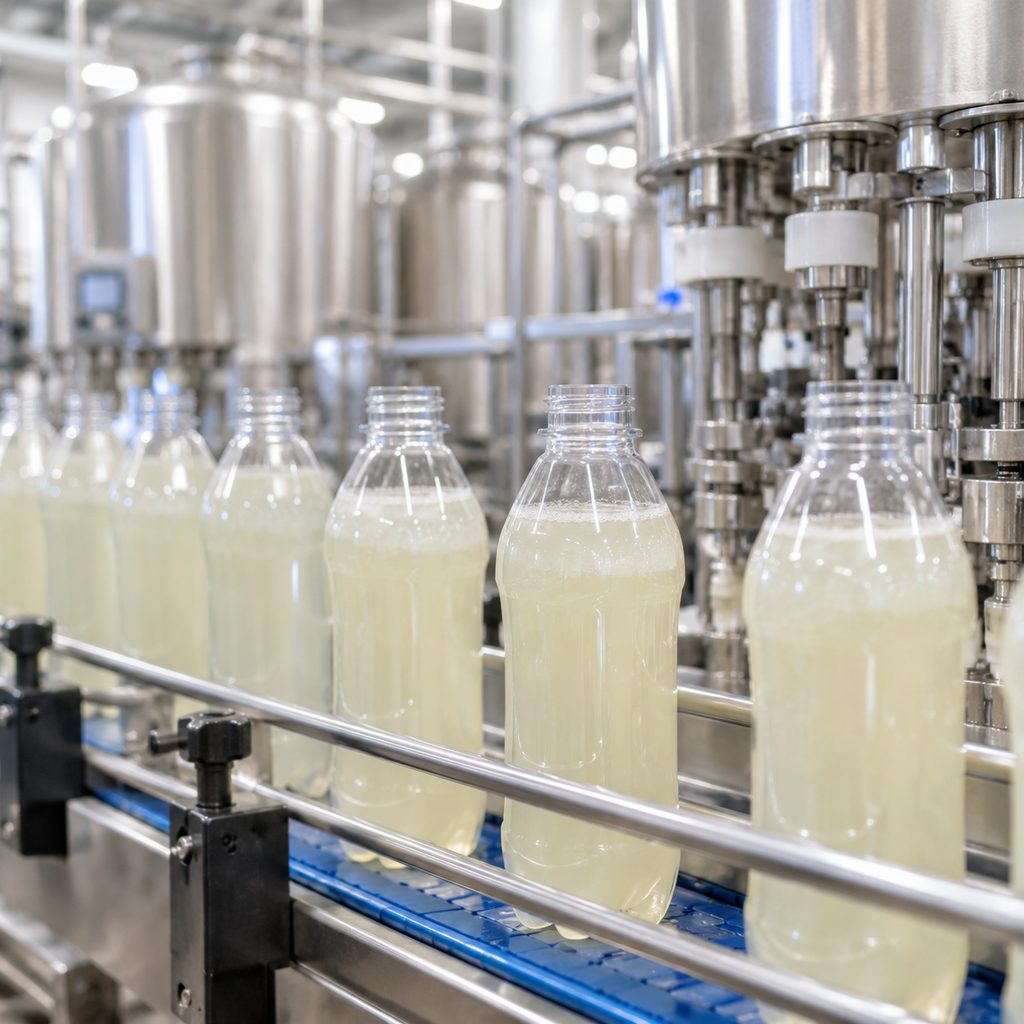
A bench formula that works in a one-liter beaker is not yet a product. For most brands, ready to drink beverage magnesium fortification becomes real at a beverage co-packer, where treated water, batching tanks, a filler and a thermal or non-thermal process turn the formula into sealed containers. Most problems at that stage come from unclear handoffs rather than from the magnesium ingredient itself.
This guide sets out who owns what, what the co-packer needs before the first run, and which checks show that a magnesium glycinate drink was made as designed.
Agree who owns each decision
Four parties usually touch the product, and each needs a defined role.
The brand owner owns the formula, the product category, the label and the finished product specification. It approves the ingredient suppliers and the acceptance criteria.
The co-packer owns water treatment, batching, filling, processing, coding and the in-process records. It follows its own food safety plan and receiving procedures.
The process authority establishes the scheduled process where one is required. 21 CFR 113.3 defines a low-acid food as one with a finished equilibrium pH above 4.6 and a water activity above 0.85. 21 CFR 114.3 defines an acidified food as a low-acid food to which acid or acid food is added, with a water activity above 0.85 and a finished equilibrium pH of 4.6 or below, and an acid food as one with a natural pH of 4.6 or below. Section 114.3 also excludes some products from part 114, including carbonated beverages and foods stored, distributed and retailed under refrigeration. Where a scheduled process is required, it is established by a qualified process authority under 21 CFR 113.83 or 21 CFR 114.83. The ingredient supplier's role is to provide ingredient data.
The ingredient supplier provides the specification, lot COAs, samples and change notifications for magnesium glycinate.
Supplier approval also needs an owner. FDA's November 2017 guidance on co-manufacturer supplier approval and verification describes when FDA does not intend to enforce certain supply-chain program requirements against a co-manufacturer. Section III of the guidance sets the same three conditions for supplier approval and for supplier verification: the brand owner conducts the approval or verification activities, the co-manufacturer describes those activities in its food safety plan, and the co-manufacturer conducts any necessary activities the brand owner does not. The same section states that the co-manufacturer is always responsible for its written receiving procedures under 21 CFR 117.420. FDA continued this enforcement discretion in November 2019 and formally extended it in guidance issued in March 2022. Settle in writing who approves the magnesium supplier and who keeps which records.
Build the handoff package
Give the co-packer a complete technical package before the pilot, not during it.
- The formula in two units: elemental magnesium per serving and ingredient mass per batch, with the lot assay used for the calculation
- The order of addition, mixing times and temperatures that worked at the bench
- Ingredient specifications and current lot COAs for every component, including magnesium glycinate
- Target ranges for pH, Brix and titratable acidity where they apply
- The appearance target and the method used to measure it
- The label, with the declared magnesium amount and the panel type
- The finished product tests, methods and acceptance criteria
Write the batch math so that anyone can repeat it. For a 1,000 L batch filled into 355 mL servings at 84 mg of elemental magnesium and an 8% as-is assay, the theoretical ingredient quantity is about 2.96 kg. If the plan compounds 2% extra liquid to cover line loss, the compounded batch needs about 3.02 kg at the same concentration. Any intentional overage is a separate, approved line. The elemental magnesium calculator and the assay and overage guide show the reasoning.
Settle the order of addition at the bench
The order in which water, acids, sweeteners, flavors and the magnesium ingredient go into the tank can change what the operator sees. Before the pilot, compare the intended order with one technically justified alternative at the bench, using the same final amounts and the co-packer's water if possible. Record whether magnesium glycinate is dispersed in a portion of the water first or added directly, and how long the tank mixes before the next addition.
If the two routes give different results at the same final pH, keep both observations and choose the route that meets the appearance and taste targets. The pH, citrate and phosphate guide explains how to investigate a difference.
Run the pilot with before and after measurements
The pilot is the first time the formula sees the real tank, filler and process. Measure the same attributes before and after the process step:
- pH, Brix and titratable acidity of the batch before filling
- Appearance or turbidity under the agreed method
- Magnesium content of the batch and of filled containers, by a validated elemental method
- Fill volume and seal integrity under the co-packer's normal checks
- Sensory comparison with the bench reference
For hot fill, tunnel pasteurization or high pressure processing, hot fill beverage mineral stability is a question about the complete formula on that line, not about the ingredient in isolation. Take samples at the start, middle and end of the run so that any drift is visible. Keep retained samples from each point. Our article on pH and heat stability testing covers the test design in more detail, and the HPP pilot checklist covers cold-pressed and HPP drinks.
Plan shelf life testing in the commercial package
Magnesium beverage shelf life testing should use product from the pilot or first commercial run, filled into the commercial container and stored under the intended conditions. Agree the time points and attributes in advance: appearance, sediment, pH, magnesium assay, sensory character and any microbiological checks the process authority requires. A bench sample in a laboratory bottle does not represent a can or a PET bottle on a warehouse shelf. The packaging and stability guide covers how package choice affects the evidence.
Define release criteria for each batch
Before the first commercial run, agree what the co-packer reports for each batch and what the brand reviews before release. A typical set includes the batch record, in-process pH and Brix, process records, finished product test results with methods, and the ingredient lot numbers used. Magnesium results should be compared with the label target using the tolerance the regulatory team has set, not with the ingredient COA.
If the format is a powder instead
A stick pack or tub of drink mix goes to a powder manufacturer rather than a liquid co-packer, and our guide to developing a powder drink mix with a contract manufacturer covers that route.
Keep changes under control
Write change notification into the co-packing agreement and the ingredient supply terms. A different water source, a new filler, a changed process temperature, a different magnesium grade or a new ingredient supplier can all affect the finished drink. Agree which changes need the brand's approval and which need a repeat pilot. The supplier change control guide is a useful starting list.
Frequently asked questions
Does the co-packer need the magnesium glycinate COA for every lot?
Yes, in most arrangements. The co-packer's receiving procedure and the brand's specification should state which documents travel with each lot and who reviews them.
Can the ingredient supplier set the thermal process?
No. Where a scheduled process is required, a qualified process authority establishes it for the finished product under 21 CFR 113.83 or 114.83. The ingredient supplier provides ingredient data.
How many pilot runs does a magnesium drink need?
There is no fixed number. Plan enough runs to show that the batch math, order of addition and process give consistent results, and repeat after any significant change.
Prepare your co-packer trial with MagneINNO
MagneINNO supplies magnesium glycinate for beverage projects with the current specification, lot COAs and free 50 g samples for bench and pilot preparation. Stock held in California typically ships in about 3 days. Contact our technical team with your co-packer brief, and we will help you prepare the ingredient documentation for the first run.
Need documentation?