Chelation Science
Can Magnesium Glycinate Really Contain 22% Elemental Magnesium?
Learn why a 22% elemental magnesium assay cannot describe pure, anhydrous bisglycinate, and what supplement brands should verify before approving an ingredient.
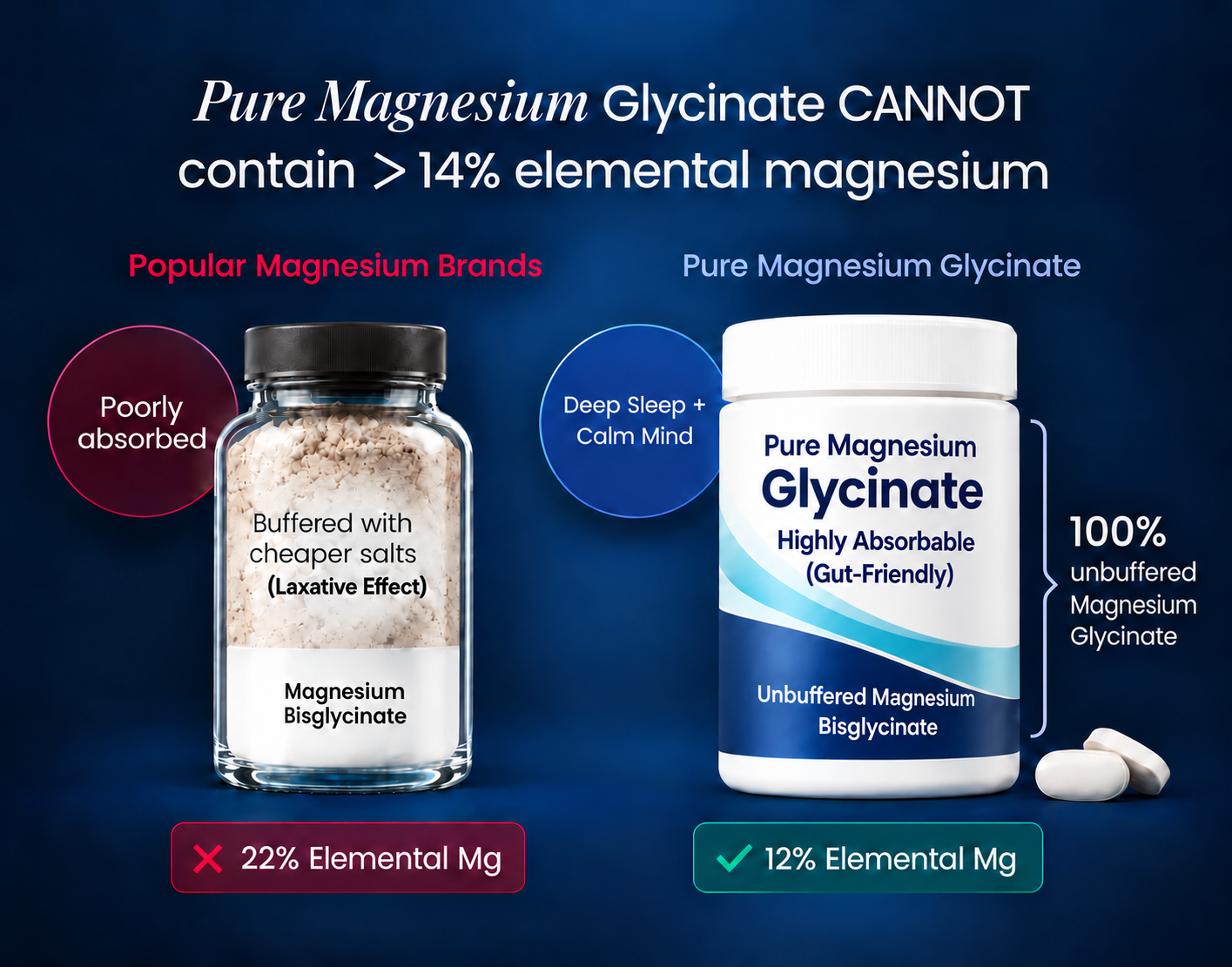
No—if “22% elemental magnesium” means 22% of the total ingredient weight, it cannot describe a material consisting solely of pure, anhydrous magnesium bisglycinate. That compound contains approximately 14.1% magnesium by mass. A higher assay requires an explanation of the composition, the reporting basis, or the accuracy of the claim.
For a supplement brand planning a genuinely pure, fully chelated magnesium glycinate product, this is a purchasing decision with consequences for the formula and the promise on the label. The useful distinction is between a documented bisglycinate chelate and a material whose high-magnesium claim is being used to imply an identity it has not demonstrated.
Why pure, anhydrous bisglycinate is approximately 14.1% magnesium
Magnesium bisglycinate has the formula C₄H₈MgN₂O₄: one magnesium atom for two glycinate units. The NIST Chemistry WebBook lists a molecular weight of 172.4223 g/mol. The CIAAW abridged atomic-weight table lists magnesium at 24.305. Using those values, the magnesium mass fraction is calculated as follows:
24.305 ÷ 172.4223 × 100 = 14.0962%, or approximately 14.1%.
This result applies to the defined anhydrous compound. Water of hydration or non-magnesium constituents increase the total material mass and reduce its magnesium fraction. They cannot explain a rise to 22% on the same total-ingredient basis. Our theoretical magnesium-content reference covers the chemistry in more detail.
What a 22% claim should trigger in supplier review
First, confirm what the percentage measures. Is it a lot-specific elemental-magnesium result, a target specification, a dry-basis result, or a percentage calculated using a different denominator? Comparing unlike bases can create an apparent difference that is unrelated to the actual ingredient identity.
If 22% is a verified magnesium fraction of the whole raw material, it is inconsistent with a single-component pure anhydrous bisglycinate description. Another magnesium-containing constituent, a different chemical identity, or a reporting error must be investigated. A buffered blend containing magnesium oxide is one possible explanation; the percentage alone cannot establish which constituent is present or how much.
A transparently described blend can be a deliberate formulation choice. The problem for a brand seeking pure glycinate arises when that blend is offered as though all of its magnesium comes from genuine bisglycinate chelate. If the composition and the “pure, unbuffered” description disagree, pause approval until the supplier resolves the mismatch in writing.
What the supplier presents | What the brand should establish |
|---|---|
22% elemental magnesium with a pure anhydrous bisglycinate claim | Resolve the inconsistency in identity, composition and assay basis before approval. |
A disclosed glycinate blend with another magnesium source | Decide whether that composition supports the planned ingredient description and product positioning. |
12% elemental magnesium with an unbuffered chelate claim | Request composition and identity evidence; the lower number alone is not proof of purity. |
12% can fit a genuine chelate specification; it does not certify it
A 12% elemental grade falls below the anhydrous theoretical value and can be consistent with a commercial magnesium bisglycinate material. It remains a magnesium-content measurement, not a purity percentage or a measurement of how much magnesium is chelated. Two materials can share an elemental assay while differing in composition.
For a “pure chelated magnesium glycinate” proposition, define the intended identity, the exclusion of added magnesium salts used for buffering, the composition limits, and the analytical evidence needed for release. Then assess the actual offered grade against that definition. See our pure magnesium glycinate verification guide for a broader qualification process.
Three questions before approving a high-magnesium quote
1. Does the declared composition support the product claim?
Ask whether the supplied ingredient is fully reacted magnesium bisglycinate or a mixture, and request disclosure of other magnesium sources and formulation constituents. “Chelated,” “high strength,” and “pure” should each map to a defined specification rather than serve as interchangeable descriptions. Carry the agreed identity into the purchase specification and the contract manufacturer’s approved material record.
2. What does each analytical result actually establish?
Review the lot COA, the elemental-magnesium assay method and basis, and the identity evidence together. An elemental method reports magnesium; that result alone does not identify every compound carrying it. Ask the technical team to explain relevant FTIR, XRD, moisture and other results, their references, and their limitations. A single spectrum or an undefined “free magnesium” result should not be converted into an exact chelation percentage. Our chelation verification article explains how complementary evidence supports the assessment.
3. Is the proposed serving based on the ingredient you intend to buy?
A hypothetical 100 mg elemental-magnesium target requires approximately 833.33 mg of a verified 12% ingredient, or 454.55 mg of a verified 22% ingredient. These calculations describe loading, not equivalent ingredient identity or product performance. Approving the smaller number without qualifying the material can turn a pure-chelate brief into a different formula. Use the elemental magnesium calculator after the ingredient specification and assay basis are agreed.
MagneINNO: genuine chelated glycinate for a product claim you can support
MagneINNO™ supplies fully reacted, unbuffered magnesium bisglycinate for brands that want genuine chelated glycinate in their formulas. We do not position added magnesium oxide as a way to inflate a pure-glycinate elemental number. Our commercial offering includes a 12% elemental grade recommended as a starting point for capsules and tablets, with other grades available for different formulation needs.
The reason to choose this route is a clear ingredient identity and a documented specification that supports the brand’s intended proposition. Review our product and company facts and request the current specification, representative lot COA, and supporting identity documentation for the grade under consideration. The 12% figure is a formulation input; the composition and analytical record provide the basis for qualifying the material.
For brands building a high-quality magnesium glycinate product, an impressive headline assay should never replace that qualification. Align the ingredient, the approved formula, and the wording consumers will see before committing to production.
Frequently asked questions
Can a 22% magnesium material ever be pure anhydrous bisglycinate?
Not when 22% is the elemental-magnesium fraction of the total material on the same basis. The defined compound is approximately 14.1% magnesium by mass. The higher figure needs a documented explanation of composition or measurement basis.
Does 22% automatically mean the product is counterfeit or poorly absorbed?
No. The figure identifies a composition question; it does not determine intent, safety, absorption or finished-product quality. A disclosed blend and a blend misrepresented as a pure chelate are different purchasing situations. Evaluate the actual composition and any performance claims separately.
Does a 12% result prove the ingredient is pure and fully chelated?
No. It is compatible with the theoretical ceiling, but the claim still requires a defined ingredient specification and suitable composition and identity evidence.
Why does the illustration say 14% instead of 14.1%?
The graphic uses a rounded headline. The calculation for pure, anhydrous magnesium bisglycinate is approximately 14.1%; 14.0% is not an exact universal cutoff for rejecting an assay. The distinction is material when reviewing results close to the theoretical value.
What should a brand send MagneINNO for qualification?
Share the intended dosage form, elemental-magnesium target per serving, market, planned ingredient description, and the documents required by your QA team or contract manufacturer. Request the current specification and a sample discussion to evaluate genuine unbuffered magnesium glycinate against that brief.
Need documentation?