MagneINNO Blog

Magnesium glycinate insights for technical and purchasing teams.

Practical articles on chelation evidence, dosage-form strategy, quality review, and supply planning for supplement brands building premium magnesium products.

Editorial Standard

Written for R&D, QA, and procurement teams. Articles focus on useful qualification questions instead of generic wellness claims.

Chelation Science

Magnesium Glycinate Solubility and Dissolution: What They Mean for Your Format

Solubility decides whether a magnesium glycinate works in a drink, dissolves cleanly in a powder, or just sits in a capsule — yet it is one of the least-discussed properties in sourcing. This guide explains solubility versus dissolution, what affects them (particle size, grade, temperature, pH), and what each format actually needs.

Jul 10, 2026Read Article

Chelation Science

Magnesium Glycinate vs. Magnesium L-Threonate: A Sourcing Comparison for Supplement Brands

Magnesium glycinate and magnesium L-threonate are often compared but occupy very different places in the market. This guide compares them on elemental magnesium (around 8% for threonate versus 10–14% for glycinate), dose and cost, positioning, and claim considerations, so you can choose the form that fits your product rather than following the trend.

Jul 10, 2026Read Article

Chelation Science

How Chelation Is Verified: FTIR and the Difference Between a True Chelate and a Physical Blend

“Chelated” is one of the most-used words on magnesium spec sheets and one of the least-verified. This guide explains what chelation means chemically and how analytical evidence — FTIR spectroscopy together with free magnesium and elemental magnesium data — separates a true magnesium chelate from a physical blend.

Jul 7, 2026Read Article

Chelation Science

Magnesium Glycinate vs. Magnesium Oxide: A Sourcing Comparison for Supplement Brands

Magnesium oxide and magnesium glycinate sit at opposite ends of the magnesium spectrum — oxide high in elemental magnesium and low-cost, glycinate lower in elemental content but positioned for gentleness. This guide compares them on elemental content, solubility, tolerability, cost, and formulation fit.

Jul 3, 2026Read Article

Chelation Science

Buffered vs. Unbuffered Magnesium Glycinate: What the Difference Really Means for Your Formula

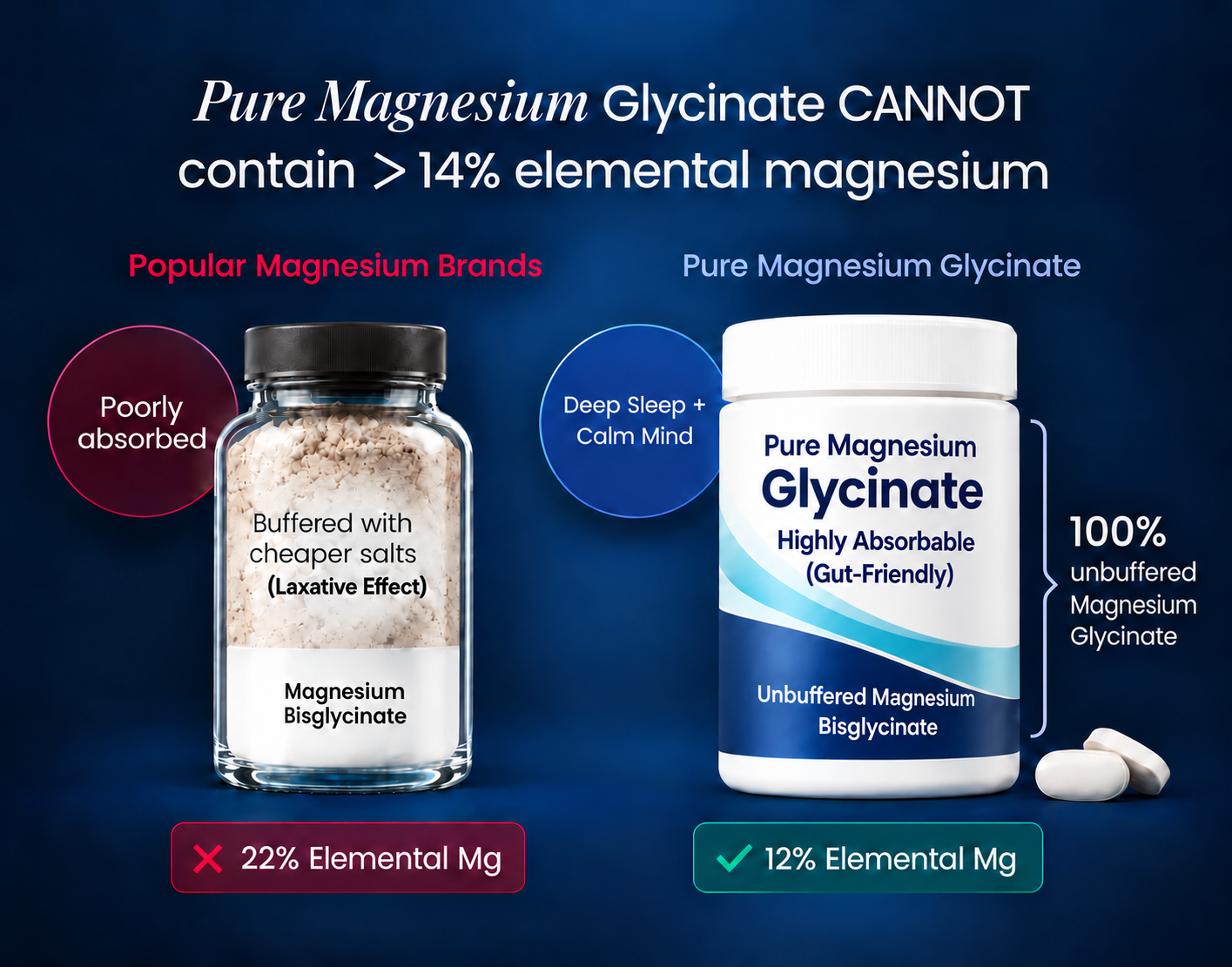
“Buffered” and “unbuffered” magnesium glycinate look alike on a spec sheet but are different materials: unbuffered is a pure chelate, while buffered is that chelate blended with magnesium oxide. This guide explains what buffering is, why manufacturers do it, the tradeoffs, and how to tell which one you are evaluating.

Jul 3, 2026Read Article

Chelation Science

Magnesium Bisglycinate 14% Elemental Magnesium: What the Specification Really Means

A magnesium bisglycinate specification reading “14% elemental magnesium” points at the theoretical ceiling of a fully reacted, anhydrous chelate. This guide explains where 14% comes from, why real-world specs are often lower (around 10–12%) due to bound water, and how a figure well above 14% can signal blending.

Jun 25, 2026Read Article

Chelation Science

Magnesium Forms Compared: Glycinate, Citrate, Oxide, Malate, and Threonate — A Sourcing Guide for Supplement Brands

With more than a dozen magnesium forms on the market, choosing one is a formulation and positioning decision, not a preference. This guide compares glycinate, citrate, oxide, malate, and threonate on elemental magnesium, solubility, taste, tolerance, and cost — so you can match the form to your product instead of chasing a single "best" magnesium.

Jun 22, 2026Read Article

Chelation Science

Magnesium Glycinate vs Magnesium Citrate: Which Is Better for Supplement Formulation?

“Which is better, magnesium glycinate or magnesium citrate?” is the wrong question for a formulator. The better question is which form fits which product goal. This guide compares the two across bioavailability framing, tolerance, taste, dosage-form fit, and positioning, so you can match the form to the product rather than chase a winner.

Jun 18, 2026Read Article

Chelation Science

Magnesium Glycinate vs Magnesium Bisglycinate: Are They the Same?

“Magnesium glycinate” and “magnesium bisglycinate” are often used interchangeably — but the terms carry different precision, and the difference matters for your label, your specification, and your supplier documentation. This guide clears up the naming, the chemistry, and what to actually ask a supplier.

Jun 18, 2026Read Article

Chelation Science

What Does 12% Elemental Magnesium Mean in Magnesium Glycinate?

In magnesium glycinate, "12% elemental magnesium" describes how much actual magnesium sits inside the compound — not the raw-material weight. Here's what elemental magnesium means for your Supplement Facts panel, capsule count, formulation cost, and supplier evaluation.

Jun 17, 2026Read Article