Quality & Regulatory
Planning Shelf Life Testing for a Magnesium Glycinate Beverage
Who owns the shelf life of a magnesium glycinate drink, which attributes to test, how to set storage conditions and what ingredient data can tell you.
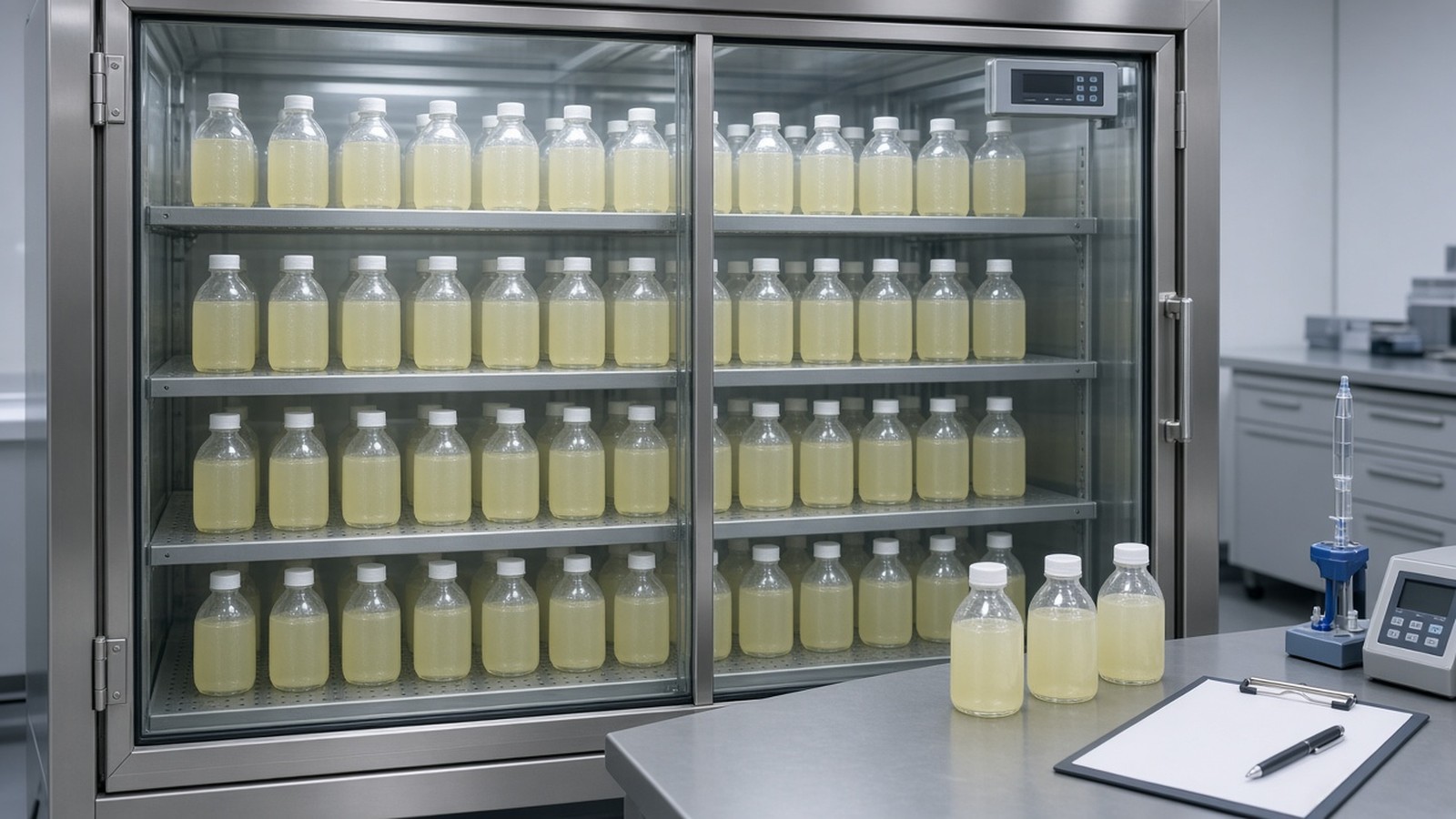
Every project that adds magnesium glycinate to a ready-to-drink beverage ends with the same question from retail and regulatory teams. How long does the drink stay on label, and what is that date based on? The answer comes from a shelf life study on the finished beverage in its final package. It cannot be copied from the ingredient specification, and it cannot be inferred from a bench test that ran for a few days.
This guide covers the planning side of magnesium beverage shelf life testing. It explains who usually owns the study, what to measure, how to choose storage conditions and how ingredient data fits in. Our knowledge base covers the bench methods in more detail.
What a shelf life date has to support
For most foods in the U.S., a date is not required by federal regulation. The USDA food product dating guidance is a general explanation of date labeling; it is not an FDA regulation for beverages. It notes that, except for infant formula, product dating is not federally required and that dates are generally about quality. Once a brand prints a date, though, retailers and customers expect the drink to meet its label and quality standard until then.
For a fortified beverage, the label part is specific. Added magnesium is a Class I nutrient under 21 CFR 101.9(g), and the finished product must be formulated to deliver at least the declared amount. The shelf life study is where the brand shows that the magnesium declared on the Nutrition Facts panel is still there at the end of the dating period.
For liquid dietary supplements, 21 CFR 111.83 ties reserve sample retention to the shelf life date when one is used, holding samples for one year past that date. That is another reason to set the date on data rather than on habit.
Decide who owns the study
Three parties usually contribute, and one should own the result.
The brand owns the date on the label and the decision to accept the data. It should approve the protocol and the acceptance criteria.
The co-packer or contract manufacturer produces the batches, often stores the samples and may run some of the tests. Its responsibilities belong in the quality agreement. Our guide to working with a beverage co-packer covers that handoff.
The ingredient supplier provides data on the ingredient itself: specification, lot COA, storage guidance and the ingredient's own shelf life in its original packaging. That data supports the study but does not replace it.
Ingredient shelf life is not beverage shelf life
MagneINNO magnesium glycinate carries a 24-month shelf life in sealed original packaging. That figure describes the dry ingredient under its storage conditions. Once the ingredient is dissolved in an acidic, flavored, carbonated or heat-treated beverage and filled into a bottle, it is part of a different system. Flavor, color, acid, packaging and process all affect what happens next.
Use the ingredient data to plan, not to set the date. Our article on magnesium glycinate stability and shelf life explains what ingredient-level stability data covers.
Choose the attributes to measure
A practical attribute list for a magnesium glycinate beverage includes:
- elemental magnesium by a validated method, against the label amount
- pH, measured each time at the same temperature, carbonation state and agreed method, distinguishing the pH of the carbonated product from a degassed QC value; the two are not interchangeable
- appearance, haze and sediment against a reference
- color, if the drink is colored or prone to browning
- flavor and odor, assessed by a trained panel against a control
- dissolved carbon dioxide or headspace pressure for carbonated products
- package checks such as closure integrity and fill level
- microbiology as defined by the process and the co-packer's food safety plan
Each attribute needs an acceptance criterion written before the study starts. For magnesium, the usual criterion is that the result stays at or above the declared amount. For sensory attributes, define the panel and what counts as a meaningful change.
Choose storage conditions that match the product
Store samples in the final package at the condition the product will meet in the market, such as ambient storage for a shelf-stable drink or refrigeration for a chilled one. Many teams add an elevated temperature condition to see trends sooner.
Drug stability guidance is sometimes borrowed for vocabulary, not as a binding rule for beverages. The ICH Q1A(R2) guideline uses 25 °C at 60% relative humidity for long-term studies and 40 °C at 75% relative humidity for accelerated studies. It also notes that humidity does not matter for products in impermeable containers, while aqueous products in semi-permeable containers should be checked for water loss. Those condition examples can inform a beverage protocol in glass, cans or PET, but Q1A is written for drugs and does not set mandatory storage or sampling rules for beverages. An elevated temperature result on a beverage is an early signal, not a substitute for real-time data at the market condition.
Plan pulls around process risk
Hot fill and other heat treatments can change a fortified drink before storage even starts. Test samples right after processing, not only from the start of storage, so the study separates process effects from storage effects. Our article on magnesium glycinate pH and heat stability testing covers screening for hot fill beverage mineral stability before the shelf life study, and the knowledge page on magnesium, pH, citrate and phosphate interactions helps when the base contains other buffers.
Set the sampling frequency from the changes you expect, the study objectives and the planned end of shelf life, not from a single rule that pulls must be denser early and wider later. Sampling may need to be more frequent near the expected end of the dating period. ICH Q1A(R2) does not make any of those choices mandatory for a beverage. Every pull should include a control or reference where the attribute needs one. Keep enough samples for retests. The packaging and storage stability page and the beverage clarity and stability screen are useful when choosing what to watch at each pull.
Batches, overage and decisions
Run the study on product made the way it will be made commercially, ideally from more than one batch and more than one ingredient lot. If a magnesium result trends downward, first check whether the samples were representative, whether sediment or uneven distribution could explain the result, whether the analysis is sound, and whether the amount delivered per serving still matches the label. A falling assay is not by itself evidence that elemental magnesium has degraded. After those checks, the brand may need a shorter date or a formulation or process change. Recording an overage in the batch documents does not, by itself, establish that the finished product meets the Class I requirement to be formulated to at least the declared amount. The assay adjustment, process loss and overage page explains how to keep label, formula and batch input separate.
If magnesium is stable but haze, sediment or flavor changes first, the date will be set by those attributes instead. Clear drinks show haze and sediment easily, which is why appearance criteria deserve as much care as the assay.
Frequently asked questions
Can the ingredient's 24-month shelf life be used as the beverage's shelf life?
No. It describes the dry ingredient in its original packaging. The beverage needs its own study in its final package.
Do accelerated conditions replace real-time testing?
No. Elevated temperature data helps spot trends early, but the date should be confirmed with real-time data at the market storage condition.
Which attribute usually limits a magnesium glycinate drink?
It depends on the product. In clear and lightly flavored drinks, appearance or flavor can change before the magnesium assay does, so measure all of them.
Get ingredient data for your stability plan
MagneINNO, the magnesium glycinate brand of NutraINNO USA Inc., provides specifications, lot COAs, storage guidance and free 50 g samples for beverage development. Contact our technical team to request the ingredient documents your shelf life protocol needs.
Need documentation?